
Dog grooming classes for beginners equip students with essential skills like safe handling, breed-specific grooming, and proper tool use to guarantee both pet and groomer safety dog grooming course. These classes build confidence and open pathways to careers in pet salons, mobile services, or independent businesses. Choosing the right class involves considering format, accreditation, flexibility, and costs. Hands-on experience is emphasized to develop real-world readiness. Exploring these elements offers a deeper understanding of starting a successful pet care career.
Why Take Dog Grooming Classes for Beginners
Although many dog owners attempt grooming at home, enrolling in dog grooming classes for beginners provides essential skills that guarantee safety and effectiveness.
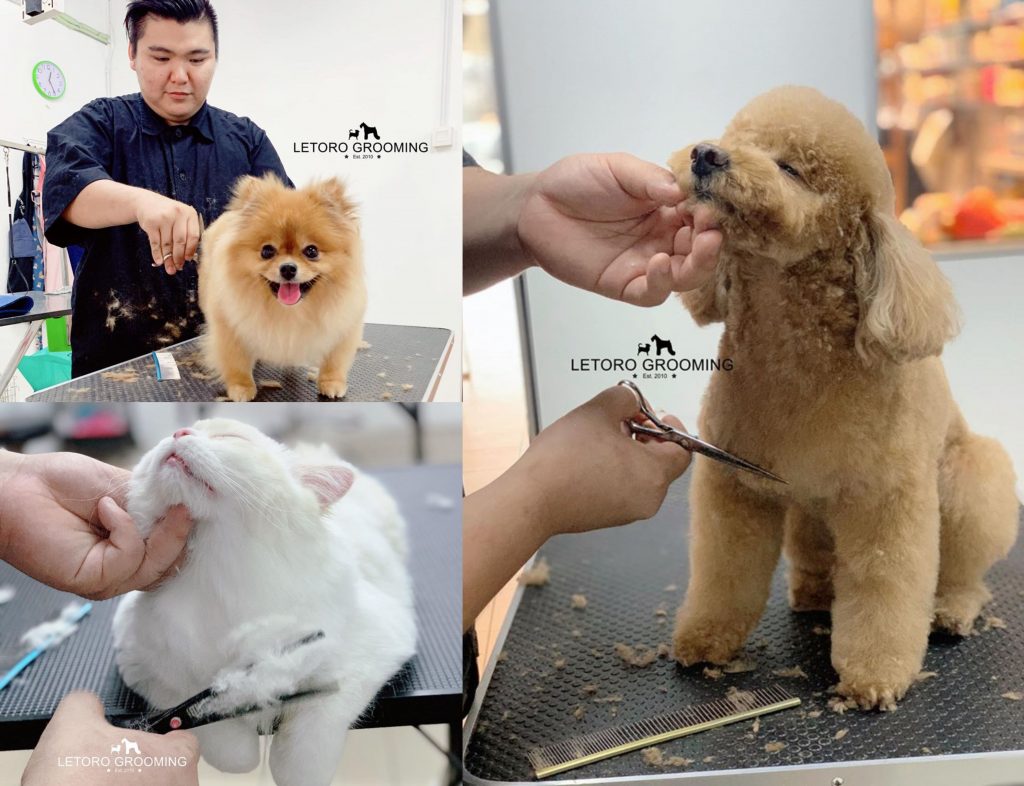
These classes equip individuals with knowledge about proper handling techniques, reducing the risk of injury to both the dog and groomer. Understanding breed-specific grooming needs guarantees pets are cared for in ways that enhance their comfort and appearance.
Additionally, beginners learn to use grooming tools correctly, which prevents accidents and improves results. Beyond technique, classes foster confidence dog grooming course malaysia, allowing groomers to work independently without hesitation.
This foundation supports personal freedom by enabling participants to offer professional services or care for their own pets with competence. Fundamentally, dog grooming classes open opportunities for skillful, safe, and autonomous grooming experiences.
How to Choose the Right Dog Grooming Class for You
Selecting the right dog grooming class requires careful consideration of individual goals, learning styles, and available resources.
Prospective students should evaluate course formats—whether in-person, online, or hybrid—to match their schedules and preferred learning environments.
Accreditation and instructor experience are vital for ensuring quality education and credibility.
Flexibility in course timing and pace allows learners to maintain autonomy over their progress, supporting a balance between study and personal life.
Costs and included materials must align with budget constraints without compromising essential content.
Additionally, reviewing student feedback helps gauge real-world applicability and satisfaction.
Ultimately, choosing a class that fits one’s lifestyle and aspirations empowers individuals to pursue dog grooming confidently and independently, fostering both skill development and personal freedom.
Basic Skills and Essential Tools You’ll Learn in Grooming Classes
Mastering fundamental grooming techniques and becoming familiar with essential tools form the foundation of any beginner dog grooming class. Students learn how to safely handle dogs, perform basic bathing, brushing, and drying, and execute simple trims tailored to different breeds. Attention to detail and patience are emphasized to guarantee both pet comfort and quality results.
Essential tools introduced include various brushes, combs, clippers, scissors, and grooming tables. Classes cover tool maintenance and proper usage to maximize efficiency and safety. Understanding coat types and skin conditions also helps students choose the right approach for each dog.
These core skills and tools empower aspiring groomers to build confidence and develop a professional standard, offering freedom to pursue rewarding careers in pet care.
How to Get the Most Hands-On Experience in Your Dog Grooming Classes
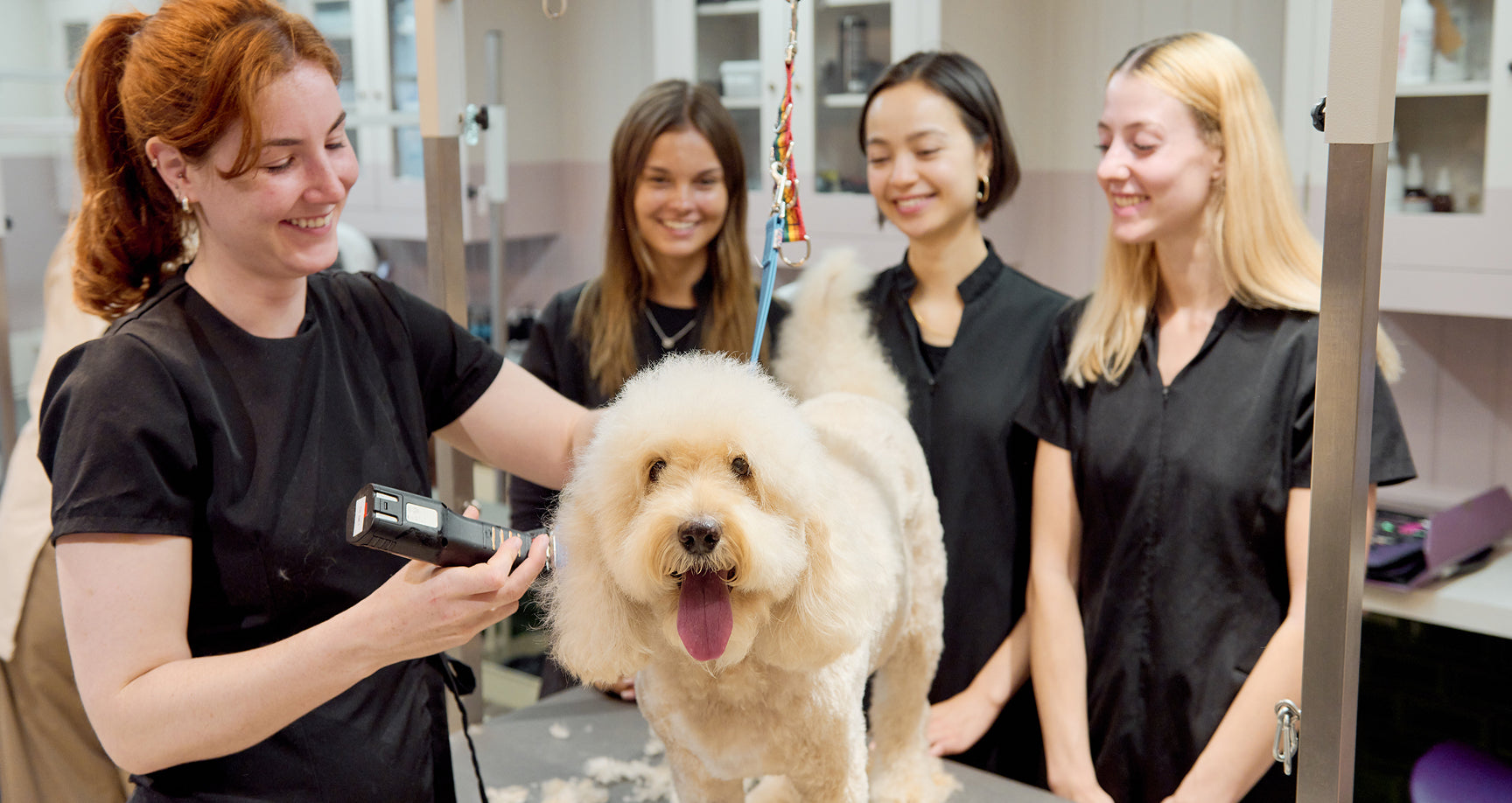
Engaging actively in practical sessions is essential for acquiring hands-on experience in dog grooming classes.
Students benefit most by practicing regularly on various breeds, which builds confidence and adaptability.
Volunteering for extra grooming opportunities during class hours can deepen understanding of techniques.
Observing instructors closely and asking targeted questions sharpens skills without losing independence.
Embracing mistakes as learning moments fosters growth and prevents hesitation.
Supplementing classwork with grooming at home or offering services to friends’ pets enhances real-world readiness.
Staying curious and experimenting within safe boundaries empowers learners to develop a personal style while mastering fundamentals.
This proactive approach maximizes learning, preparing individuals to maneuver freely and competently in future pet care roles.
Career Paths and Opportunities After Dog Grooming Classes
Upon completing dog grooming classes, numerous career paths become accessible, ranging from working in established pet salons to launching independent grooming businesses.
Graduates can choose employment at veterinary clinics, pet resorts, or mobile grooming services, all offering flexible schedules.
For those valuing autonomy, starting a private grooming service allows control over clientele, hours, and pricing.
Opportunities also exist in pet product retail, dog training centers, or as grooming instructors.
With growing pet ownership, demand for skilled groomers remains strong, providing financial stability and creative freedom.
Additionally, certifications gained through classes can open doors to specialized roles, such as grooming show dogs or providing breed-specific styling.
Conclusion
Dog grooming classes for beginners provide foundational skills and practical experience essential for pursuing a career in pet care. Selecting the right course guarantees thorough learning of grooming techniques and tool usage. Hands-on practice within these classes enhances proficiency and confidence. Completion of such training opens diverse career opportunities in the pet care industry, ranging from professional groomer roles to specialized pet care services, making it a valuable step for those committed to working with animals.
…


